
• Skip to main content
  • Skip to secondary menu
  • Skip to primary sidebar
  • Skip to footer
Montreal AI Ethics Institute

Montreal AI Ethics Institute

Democratizing AI ethics literacy

  • Articles
    • Public Policy
    • Privacy & Security
    • Human Rights
      • Ethics
      • JEDI (Justice, Equity, Diversity, Inclusion
    • Climate
    • Design
      • Emerging Technology
    • Application & Adoption
      • Health
      • Education
      • Government
        • Military
        • Public Works
      • Labour
    • Arts & Culture
      • Film & TV
      • Music
      • Pop Culture
      • Digital Art
  • Columns
    • AI Policy Corner
    • Recess
    • Tech Futures
  • The AI Ethics Brief
  • AI Literacy
    • Research Summaries
    • AI Ethics Living Dictionary
    • Learning Community
  • The State of AI Ethics Report
    • State of AI Ethics Report Volume 8 (2026): Call for Contributors
    • Volume 7 (November 2025)
    • Volume 6 (February 2022)
    • Volume 5 (July 2021)
    • Volume 4 (April 2021)
    • Volume 3 (Jan 2021)
    • Volume 2 (Oct 2020)
    • Volume 1 (June 2020)
  • About
    • Our Contributions Policy
    • Our Open Access Policy
    • Contact
    • Donate

AI Policy Corner: The Colorado State Deepfakes Act

April 14, 2025

✍️ By Ogadinma Enwereazu.

Ogadinma is a PhD Student in Political Science and a Graduate Affiliate at the Governance and Responsible AI Lab (GRAIL), Purdue University.


📌 Editor’s Note: This article is part of our AI Policy Corner series, a collaboration between the Montreal AI Ethics Institute (MAIEI) and the Governance and Responsible AI Lab (GRAIL) at Purdue University. The series provides concise insights into critical AI policy developments from the local to international levels, helping our readers stay informed about the evolving landscape of AI governance.


The Colorado State Deepfakes Act

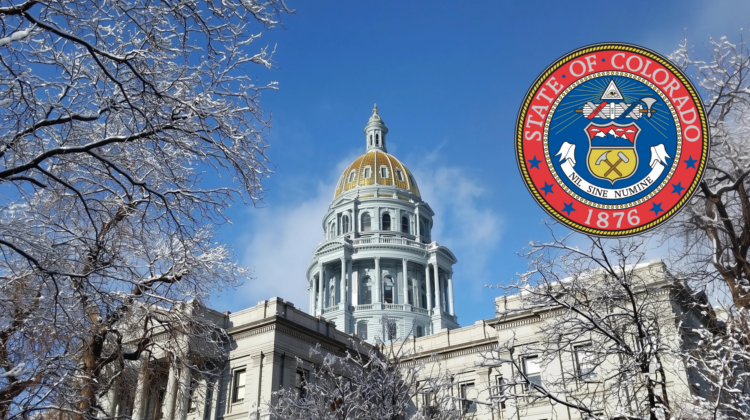
In 2024, the state of Colorado enacted the Candidate Election Deepfake Disclosures Act which primarily aims to address the increasing concern around AI-generated deepfakes in political campaigns.  

What are Deepfakes?

“Deepfakes” refer to synthetic or manipulated media such as images, videos, or audio, generated by artificial intelligence to falsely depict an individual saying or doing something they never actually said or did. 

Key Provisions of the Colorado Election Deepfake Disclosures Act

The Act prohibits the distribution of media content of candidates running for elected office with deepfakes that are undisclosed or insufficiently labelled, especially when done with knowledge and disregard for the content’s falsity. The Act clearly distinguishes deepfakes from AI-enhanced media by excluding minimally edited or adjusted media content.

To comply with this Act, any such communication must feature a clear and concise disclosure stating:

“This (image/audio/video/multimedia) has been edited and depicts speech or conduct that falsely appears to be authentic or truthful.”

The above disclaimer should also be included in the communication’s metadata and, where feasible, should be difficult to remove by future users 

Liability and Enforcement

For unpaid advertising violations, penalties start at $100 per violation; for paid advertising, at least 10% of the amount spent on the communication. Additionally, candidates depicted in undisclosed or improperly disclosed deepfakes can pursue civil action for injunctive relief or damages, including attorney fees and costs.  

Exemptions

The Act exempts certain entities from liability, including interactive computer services, broadcasting stations (radio, television, cable, satellite), internet websites, regularly published newspapers and providers of technology used in creating deepfakes, provided they comply with immunities granted by federal law.  

Limitations of the Act

Deepfakes can go viral in minutes, and by the time enforcement kicks in, the reputational damage is already done. Also, since deepfakes are often generated outside of the country, the legislation is unlikely to have a substantial practical effect. 

Most deepfake detection technologies are still catching up with the capabilities of generative AI. This raises questions about the effectiveness of enforcement if the content in question is not easily identifiable as fake. Attorney General Phil Weiser acknowledged this in a September 2024 statement, warning that even AI tools built to detect deepfakes often struggle to keep up.  

As of today, over 30 states across the U.S. have introduced or passed deepfake laws, reflecting a broad agreement on the serious risks they pose. However, the penalties have varying severity. States like New Jersey and Louisiana impose harsher penalties, including multi-year prison sentences and fines reaching $50,000. Some other states, like Delaware and California, rely on disclosure requirements or injunctive relief without imposing significant financial or criminal penalties. Colorado’s minimum $100 fine for undisclosed deepfake is relatively modest. 

As generative AI continues to evolve, states may face increased pressure to update their regulatory frameworks on deepfakes to safeguard electoral integrity and address broader ethical concerns about privacy and consent. 

Further Reading

  1. HB24-1147 Candidate Election Deepfake Disclosure Act 
  2. What are Deepfakes, and how are they created?  
  3. Regulating Election Deepfakes: a comparison of state laws 

Want quick summaries of the latest research & reporting in AI ethics delivered to your inbox? Subscribe to the AI Ethics Brief. We publish bi-weekly.

Primary Sidebar

SAIER Volume 8 (2026)

SAIER Volume 8 (2026) Call for Contributors

🔍 SEARCH

Spotlight

Vertically- and horizontally-placed chess boards and chess pieces

Tech Futures: At the Frontier of Fear, Uncertainty and Doubt

Tech Futures: Introducing the Resist List

An abstract spiral of dark circles appears at the centre, resembling a tornado. Several vintage magazine covers and advertisements are being drawn toward the spiral. The artworks that have already been pulled into it are becoming distorted and replaced with clusters of numbers representing their numerical embeddings.

Tech Futures: Better Imagination for Better Tech Futures

This image is a collage with a colourful Japanese vintage landscape showing a mountain, hills, flowers and other plants and a small stream. There are 3 large black data servers placed in the bottom half of the image, with a cloud of black smoke emitting from them, partly obscuring the scenery.

Tech Futures: Crafting Participatory Tech Futures

A network diagram with lots of little emojis, organised in clusters.

Tech Futures: AI For and Against Knowledge

related posts

  • The Nonexistent Moral Agency of Robots – A Lack of Intentionality and Free Will

    The Nonexistent Moral Agency of Robots – A Lack of Intentionality and Free Will

  • State of AI Ethics Report Volume 8 (2026): Call for Contributors

    State of AI Ethics Report Volume 8 (2026): Call for Contributors

  • Are Large Language Models a Threat to Digital Public Goods? Evidence from Activity on Stack Overflow

    Are Large Language Models a Threat to Digital Public Goods? Evidence from Activity on Stack Overflow

  • Artificial intelligence and biological misuse: Differentiating risks of language models and biologic...

    Artificial intelligence and biological misuse: Differentiating risks of language models and biologic...

  • The State of AI Ethics Report (June 2020)

    The State of AI Ethics Report (June 2020)

  • Putting collective intelligence to the enforcement of the Digital Services Act

    Putting collective intelligence to the enforcement of the Digital Services Act

  • The Ethics of AI in Medtech: A Discussion With Abhishek Gupta

    The Ethics of AI in Medtech: A Discussion With Abhishek Gupta

  • This image is a collage with a colourful Japanese vintage landscape showing a mountain, hills, flowers and other plants and a small stream. There are 3 large black data servers placed in the bottom half of the image, with a cloud of black smoke emitting from them, partly obscuring the scenery.

    Tech Futures: Crafting Participatory Tech Futures

  • The Participatory Turn in AI Design: Theoretical Foundations and the Current State of Practice

    The Participatory Turn in AI Design: Theoretical Foundations and the Current State of Practice

  • Report on Publications Norms for Responsible AI

    Report on Publications Norms for Responsible AI

Partners

  •  
    U.S. Artificial Intelligence Safety Institute Consortium (AISIC) at NIST

  • Partnership on AI

  • The LF AI & Data Foundation

  • The AI Alliance

Footer


Articles

Columns

AI Literacy

The State of AI Ethics Report


About Us


Founded in 2018, the Montreal AI Ethics Institute (MAIEI) is an international non-profit organization equipping citizens concerned about artificial intelligence and its impact on society to take action.

Contact

Donate


  • © 2025 MONTREAL AI ETHICS INSTITUTE.
  • This work is licensed under a Creative Commons Attribution 4.0 International License.
  • Learn more about our open access policy here.
  • Creative Commons License

    Save hours of work and stay on top of Responsible AI research and reporting with our bi-weekly email newsletter.