


✍️ By Ismael Kherroubi Garcia.
Ismael is Founder & Co-lead of the Responsible Artificial Intelligence Network (RAIN), and Founder & CEO of Kairoi.
📌 Editor’s Note: This article is part of our Tech Futures series, a collaboration between the Montreal AI Ethics Institute (MAIEI) and the Responsible Artificial Intelligence Network (RAIN). The series challenges mainstream AI narratives, proposing that rigorous research and science are better sources of information about AI than industry leaders. This eighth instalment of Tech Futures by RAIN suggests engaging in deep reflection and meaningful dialogue to create more interesting visions of our tech futures, inviting you to contribute to the Library of Prompts.
What does the future of artificial intelligence (AI) look like? Who is envisaging that future and making it possible? Today, AI developments are driven by a few elites who draw on a very narrow set of fictions to imagine the future of AI.
“I guess, some day, we will have ‘God AI’” is the quote with which we began this very series. It was a statement from Nvidia’s CEO, Jensen Huang, and it is a tired trope. “Artificial general intelligence” (AGI) and “superintelligence” are how Huang’s “God AI” is usually referred to. The exact form of that “God AI” and when it will come about, nobody knows; but everybody with a financial stake is adamant that it is coming. This is the AI inevitability narrative.
There are many problems with the AI inevitability narrative. For one, the idea of AGI has deep roots in eugenic ideologies; that is, the pursuit of AGI implies a ranking of human features, the best of which are determined by a small group. Another issue is the diversion of resources towards fiction-based claims about AI. While the cost of living grows disproportionately and extreme weather becomes commonplace, hundreds of billions of dollars are being funneled towards the AI-fuelled data centre frenzy. Perhaps the greatest problem is that speaking of inevitability entails a lack of agency for individuals, collectives and the whole of humanity. The elites peddling the AI snake oil are convincing us that the only way is AI, and that nobody can steer humanity towards AI but them.
“What we have is a crisis of imagination. Albert Einstein said that you cannot solve a problem with the same mindset that created it. Foundation dollars should be the best “risk capital” out there.”— Peter Buffett (2013)
What the AI elites have is a severe lack of imagination, and that lack of imagination is spreading like wildfire. AI is marketed as powerful robots from movies, its underpinning equations flimsily compared to the human brain, and its potential benefits framed as purely economic. There is no inspiring, mind-bending vision for what is to come with or without AI. What we are given is a vision for a world where inequality grows and oceans burn, but faster. The future in the mind’s eye of the elite is the present, only worse.
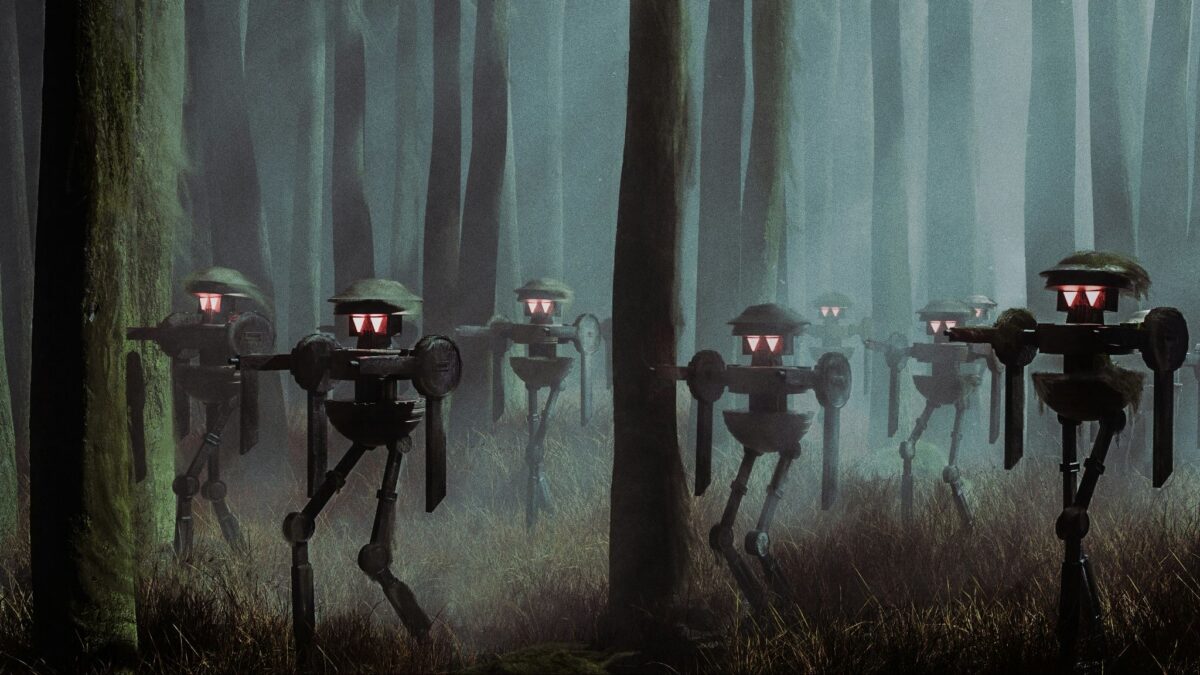
Caption: Photo by robin mikalsen on Unsplash
We need to imagine better. And that imagination must be able to draw on far more than prevalent forms of fiction and economics. The sources of our visions for the future must be diverse. Diversity of thought and experience is central to scientific discovery, as we’ve previously discussed with regard to the UN’s Scientific Panel on AI. In the context of imagination, being able to bring your whole self means letting go of preconceptions about the world, digging deep into memories, events, emotions and sensations that articulate a unique story.
“The imagination is indispensable to action as well. For the real world is worth our exertion only insofar as an inner scene is projected on it, or rather behind it—only when the visionary imagination sets the scene for action.”—Eva Brann (1977)
To help novel imaginings emerge, we have been working on a series of “prompts” in the now seemingly old sense of the world:
Prompt (noun)
- Something that prompts: such as a reminder
- Something that moves someone to action, especially something (such as a question or idea) used to spark a creative effort
The prompts will be used at our upcoming Crafting Participatory Tech Futures workshop during the Fairness, Accountability and Transparency (FAccT) conference in Montreal, and future iterations. The prompts will be central to helping participants hold deep conversations while shedding preconceptions. For this purpose, prompts are decontextualised, sometimes surprising, and often from sources that seemingly have little to do with tech or AI. What we aim to achieve through the workshops is to articulate a series of tech futures and the journeys to get there as devised through creative thinking and meaningful dialogue. What’s more, anybody can contribute a prompt by using this form, which contains further details about the initiative and getting involved.
And this is the way to go about the crisis of imagination that has been denounced. It is down to us, the 99%, to envision what technology can look like in the future, not to kid ourselves about unattainable dreams but to take ownership of the actions that will make them a reality.
Image credit: Reihaneh Golpayegani / Better Images of AI / CC BY 4.0