

• Skip to main content
  • Skip to secondary menu
  • Skip to primary sidebar
  • Skip to footer
Montreal AI Ethics Institute

Montreal AI Ethics Institute

Democratizing AI ethics literacy

  • Articles
    • Public Policy
    • Privacy & Security
    • Human Rights
      • Ethics
      • JEDI (Justice, Equity, Diversity, Inclusion
    • Climate
    • Design
      • Emerging Technology
    • Application & Adoption
      • Health
      • Education
      • Government
        • Military
        • Public Works
      • Labour
    • Arts & Culture
      • Film & TV
      • Music
      • Pop Culture
      • Digital Art
  • Columns
    • AI Policy Corner
    • Recess
    • Tech Futures
  • The AI Ethics Brief
  • AI Literacy
    • Research Summaries
    • AI Ethics Living Dictionary
    • Learning Community
  • The State of AI Ethics Report
    • State of AI Ethics Report Volume 8 (2026): Call for Contributors
    • Volume 7 (November 2025)
    • Volume 6 (February 2022)
    • Volume 5 (July 2021)
    • Volume 4 (April 2021)
    • Volume 3 (Jan 2021)
    • Volume 2 (Oct 2020)
    • Volume 1 (June 2020)
  • About
    • Our Contributions Policy
    • Our Open Access Policy
    • Contact
    • Donate

GenAI Against Humanity: Nefarious Applications of Generative Artificial Intelligence and Large Language Models

December 6, 2023

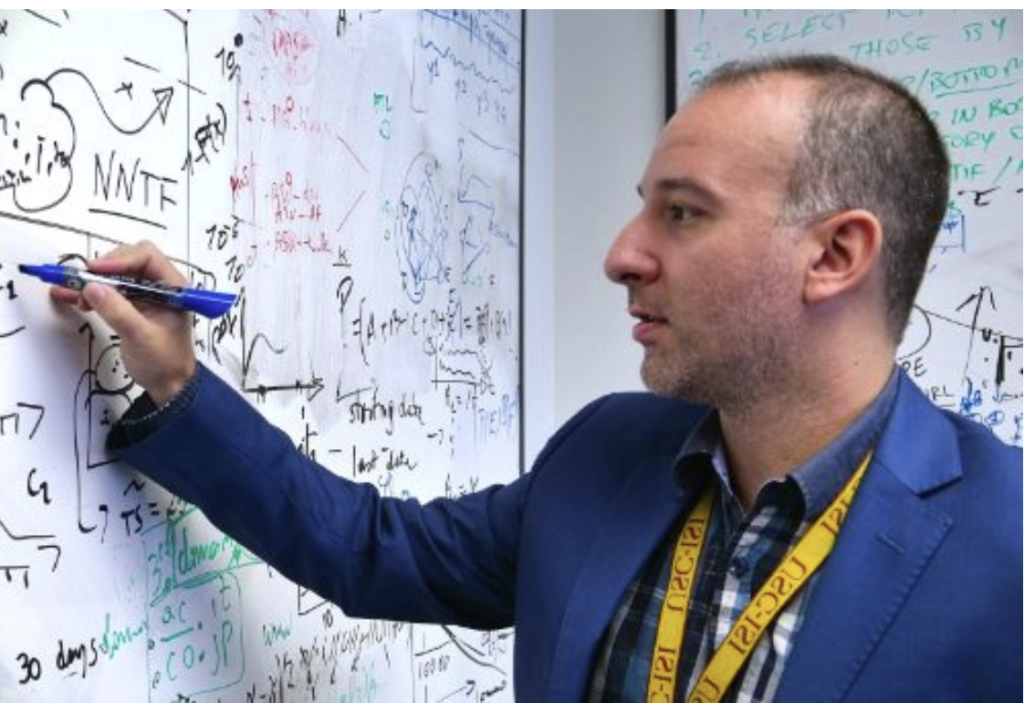
🔬 Research Summary by Emilio Ferrara, a professor at the Thomas Lord Department of Computer Science of the University of Southern California.

[Original paper by Emilio Ferrara]


Overview: This paper delves into the dual nature of Generative Artificial Intelligence (GenAI) and Large Language Models (LLMs), highlighting their potential for both groundbreaking advancements and malicious misuse. By examining various applications, the viewpoint underscores these technologies’ ethical and societal challenges, emphasizing the need for responsible deployment.


Introduction

In 2019, a UK-based energy company was deceived by a synthetic voice impersonating the parent firm’s CEO, requesting a money transfer, leading to a significant financial loss. This incident, while alarming, is a mere glimpse into the vast implications of GenAI and LLMs. My research aims to explore the myriad ways in which these technologies can be harnessed for both beneficial and nefarious purposes. Through a deep dive into various applications, the paper seeks to answer the following questions: How can GenAI and LLMs reshape society, and what are the potential risks associated with their misuse?

Key Insights

GenAI’s Transformative Potential

Generative AI has shown promise across various sectors, from restoring historical artifacts to enhancing personalized content generation. Its ability to generate content, simulate voices, and even recreate experiences has opened up a plethora of opportunities, promising innovations that could redefine industries.

The Dark Side of GenAI

However, the same capabilities that make GenAI revolutionary also make it susceptible to misuse. My research highlights concerns related to targeted surveillance, where enhanced capabilities can lead to invasive monitoring. While essential for removing harmful content, content moderation can be weaponized for extreme censorship. Adversarial attacks, powered by GenAI, can deceive even experts, leading to potential security breaches. Furthermore, the ability to manipulate public sentiment can have cascading effects on socio-technical systems, from influencing stock markets to swaying election outcomes.

Planetary Implications

The paper emphasizes the planetary implications of GenAI, especially when deployed at scale. Its influence extends beyond technological advancements, impacting socio-technical systems, including the economy, democracy, and infrastructure.

Between the lines

The findings of this research are both enlightening and alarming. While GenAI and LLMs hold immense potential, their unchecked proliferation can lead to unprecedented challenges. The paper serves as a timely reminder of the ethical considerations that must accompany technological advancements. One gap in the research is the exploration of potential mitigation strategies to address the highlighted concerns. Future research could delve deeper into developing robust defense mechanisms and ethical guidelines to ensure the responsible deployment of GenAI and LLMs.

Want quick summaries of the latest research & reporting in AI ethics delivered to your inbox? Subscribe to the AI Ethics Brief. We publish bi-weekly.

Primary Sidebar

SAIER Volume 8 (2026)

SAIER Volume 8 (2026) Call for Contributors

🔍 SEARCH

Spotlight

Vertically- and horizontally-placed chess boards and chess pieces

Tech Futures: At the Frontier of Fear, Uncertainty and Doubt

Tech Futures: Introducing the Resist List

An abstract spiral of dark circles appears at the centre, resembling a tornado. Several vintage magazine covers and advertisements are being drawn toward the spiral. The artworks that have already been pulled into it are becoming distorted and replaced with clusters of numbers representing their numerical embeddings.

Tech Futures: Better Imagination for Better Tech Futures

This image is a collage with a colourful Japanese vintage landscape showing a mountain, hills, flowers and other plants and a small stream. There are 3 large black data servers placed in the bottom half of the image, with a cloud of black smoke emitting from them, partly obscuring the scenery.

Tech Futures: Crafting Participatory Tech Futures

A network diagram with lots of little emojis, organised in clusters.

Tech Futures: AI For and Against Knowledge

related posts

  • The AI Junkyard: Thinking Through the Lifecycle of AI Systems

    The AI Junkyard: Thinking Through the Lifecycle of AI Systems

  • Measuring Value Understanding in Language Models through Discriminator-Critique Gap

    Measuring Value Understanding in Language Models through Discriminator-Critique Gap

  • Cascaded Debiasing : Studying the Cumulative Effect of Multiple Fairness-Enhancing Interventions

    Cascaded Debiasing : Studying the Cumulative Effect of Multiple Fairness-Enhancing Interventions

  • The Ethical Need for Watermarks in Machine-Generated Language

    The Ethical Need for Watermarks in Machine-Generated Language

  • To Be or Not to Be Algorithm Aware: A Question of a New Digital Divide? (Research Summary)

    To Be or Not to Be Algorithm Aware: A Question of a New Digital Divide? (Research Summary)

  • Mind your Language (Model): Fact-Checking LLMs and their Role in NLP Research and Practice

    Mind your Language (Model): Fact-Checking LLMs and their Role in NLP Research and Practice

  • The Role of Relevance in Fair Ranking

    The Role of Relevance in Fair Ranking

  • Outsourced & Automated: How AI Companies Have Taken Over Government Decision-Making

    Outsourced & Automated: How AI Companies Have Taken Over Government Decision-Making

  • The Unequal Opportunities of Large Language Models: Revealing Demographic Bias through Job Recommend...

    The Unequal Opportunities of Large Language Models: Revealing Demographic Bias through Job Recommend...

  • Algorithms Deciding the Future of Legal Decisions

    Algorithms Deciding the Future of Legal Decisions

Partners

  •  
    U.S. Artificial Intelligence Safety Institute Consortium (AISIC) at NIST

  • Partnership on AI

  • The LF AI & Data Foundation

  • The AI Alliance

Footer


Articles

Columns

AI Literacy

The State of AI Ethics Report


About Us


Founded in 2018, the Montreal AI Ethics Institute (MAIEI) is an international non-profit organization equipping citizens concerned about artificial intelligence and its impact on society to take action.

Contact

Donate


  • © 2025 MONTREAL AI ETHICS INSTITUTE.
  • This work is licensed under a Creative Commons Attribution 4.0 International License.
  • Learn more about our open access policy here.
  • Creative Commons License

    Save hours of work and stay on top of Responsible AI research and reporting with our bi-weekly email newsletter.