
Summary contributed by Ajay Divakaran, a senior technical director, Center for Vision Technologies, SRI International.
[Original paper by Ajay Divakaran, Aparna Sridhar, Ramya Srinivasan]
Overview: The paper explores how non-Western ethical abstractions, methods of learning, and participatory practices observed in Indian arts, one of the most ancient yet perpetual and influential art traditions, can inform the AI ethics community. We derive insights such as the need for incorporating holistic perspectives, recognizing AI ethics as a multimodal, dynamic and shared lifelong learning process, and the need for identifying ethical commonalities across multiple cultures and using those to inform AI design.
Introduction
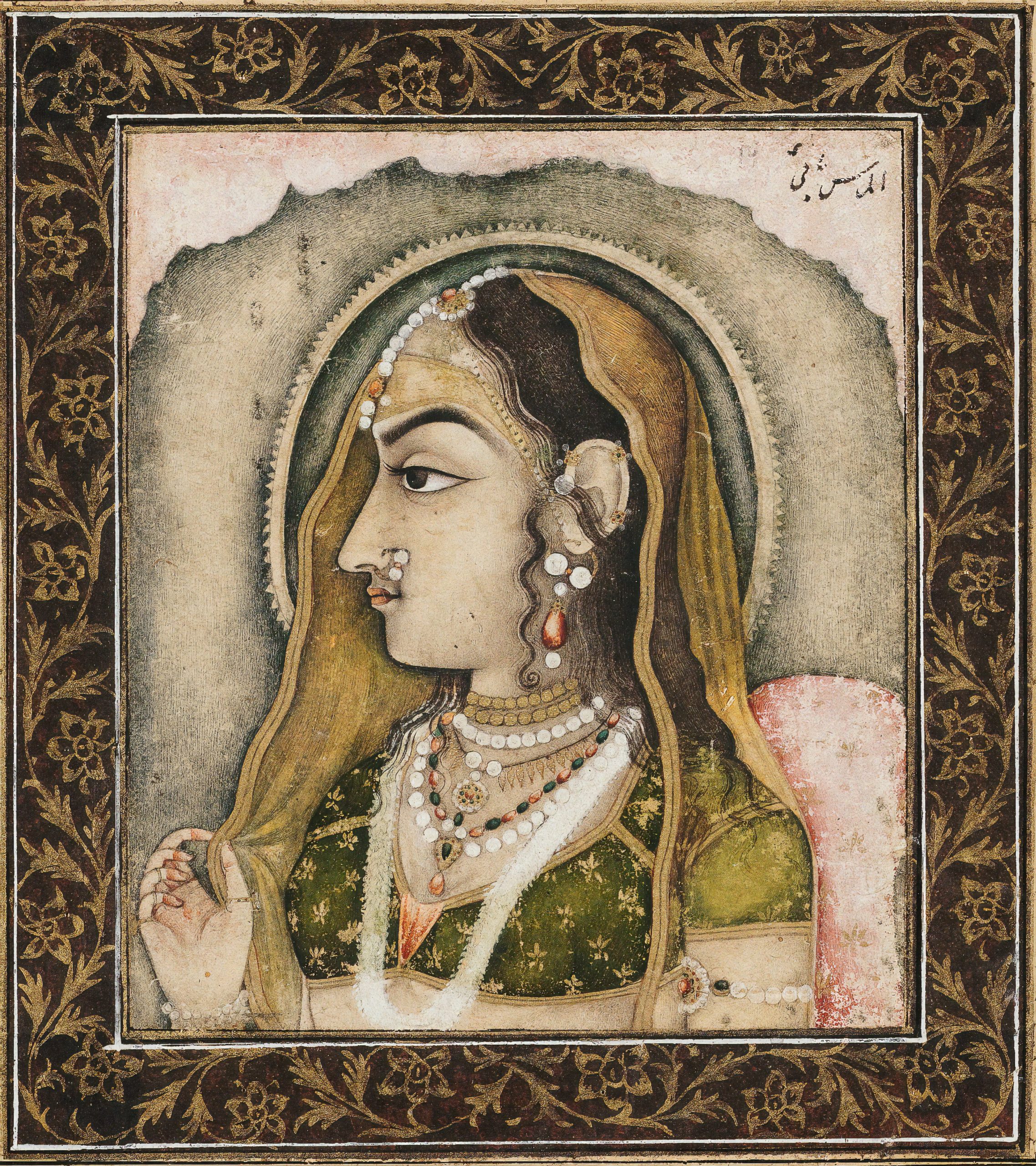
Systems based on data driven training pick up biases inherent in the data. In one instance a classifier made a firm association between “table tennis player” and “Asian” because it had only seen Asians play table tennis. One could easily imagine such inadvertent associations causing great harm. An obvious approach to instilling ethics in such AI would be to guide the training using a computational representation for norms that constitute ethics, Norms can be both explicit and implicit, and in Non-Western cultures especially, many critical norms are implicit i.e. not written down but evident in practice such as in art. Therefore, we investigated Indian art to find out how its theory and practice could reveal new insights into ethical guidance for data driven AI. We conducted qualitative interviews with sixteen artists, scholars and researchers of diverse Indian art forms to gain insights regarding their learning and practice that would then inform design of ethical AI. We found that Indian art is a dynamic tradition that emphasizes improvisation that balances spontaneity and creativity on one hand with following the general principles on the other. We gleaned some insights that would be useful in informing AI training with ethics.
Key Insights
Incorporating interdisciplinary perspectives is seen as an essential step towards enhancing artificial intelligence (AI) ethics. In this regard, the field of arts is perceived to play a key role in elucidating diverse historical and cultural narratives, serving as a bridge across research communities. Most of the works that examine the interplay between the field of arts and AI ethics concern digital artworks, largely exploring the potential of computational tools in being able to surface biases in AI systems. The paper investigates a complementary direction–that of uncovering the unique socio-cultural perspectives embedded in human-made art, which in turn, can be valuable in expanding the horizon of AI ethics.
Acquisition of insights into Indian art through qualitative interviews
Through qualitative interviews of sixteen artists, art scholars, and researchers of diverse Indian art forms, we explore how non-Western ethical abstractions, methods of learning, and participatory practices observed in Indian arts, one of the most ancient yet perpetual and influential art traditions, can inform the Fairness, Accountability, and Transparency (FAccT) community. Our interviews focus on four key research questions (RQs):
- RQ1: What kind of ethical abstractions can be learned from Indian arts?
- RQ2: Can Indian arts inform the FAccT community of new forms of learning that could potentially help in enhancing fairness and accountability of AI systems?
- RQ3: Can Indian arts shed light on new forms of participatory approaches that can be useful in the AI pipeline?
- RQ4: Can we learn new ways of designing adaptable and robust AI systems by looking at Indian artists and arts?
Information about specific art forms, especially performing arts like dance and music, cannot be analyzed purely based on literature reviews. More broadly, given that interfacing with practitioners and other domain experts can better illumine aspects related to art information creation, sharing, and distribution, we adopt an interview-based approach. Responses from sixteen interview participants whose backgrounds span diverse Indian art forms such as Indian classical music (Carnatic and Hindustani forms), Indian style painting (silk cloth painting, Thanjavur paintings), Indian dance (Kuchipudi and Vilasini dance forms), Kolam (traditional geometric floor drawings) among others, are summarized in the context of the RQs mentioned above.
The way forward
Indian art has a unique blend of core principles and flexible interpretation and improvisation that has led to a dynamic tradition spanning many centuries. The emphasis is on preserving a particular inner experience rather than externally visible details. Such an artistic temperament is different from the grammatically rigid Western view of art that prescribes precise rules for every aspect of what is externally visible. Our task, therefore, consists of capturing such an ethos in the form of critical insights and then using those to identify research threads in AI that would help realize the guidance of the underlying ethics of AI with that ethos. The answers to our research questions from our respondents span multiple aspects, such as the overall process and experience of creation, the process of learning and practice, the recognition of multiple points of view, and the accommodation of such diversity in a dynamic tradition that we describe in our paper.
Insights from our study suggest:
(1) the need for incorporating holistic perspectives (that are informed both by data-driven observations and prior beliefs encapsulating the structural models of the world) in designing ethical AI algorithms,
(2) the need for integrating multimodal data formats for design, development, and evaluation of ethical AI systems,
(3) the need for viewing AI ethics as a dynamic, cumulative, shared process rather than as a self-contained framework to facilitate adaptability without the annihilation of values,
(4) the need for consistent life-long learning to enhance AI accountability, and
(5) the need for identifying ethical commonalities across cultures and infusing the same into AI system design, to enhance applicability across geographies.
Between the Lines
Our work reveals new insights into the teaching and learning process behind Indian arts that bring out its inherent dynamism and flexibility even as it preserves core principles. The spirit of improvisation within the guidelines of an overall structure is at the heart of Indian art. While we have characterized that spirit somewhat, clarifying and operationalizing such insights for ethically informed AI is an ongoing challenge. It requires further elaboration of each aspect of Indian art we have discussed to drive the required breakthroughs. Those will need to be in neuro-symbolic AI, lifelong learning, generative models, and multimodal modeling. Our paper represents the first step in building a rich framework for ethics-driven AI that can accommodate dynamism coupled with adherence to principles and uncover and incorporate ethical commonalities between multiple cultures.